
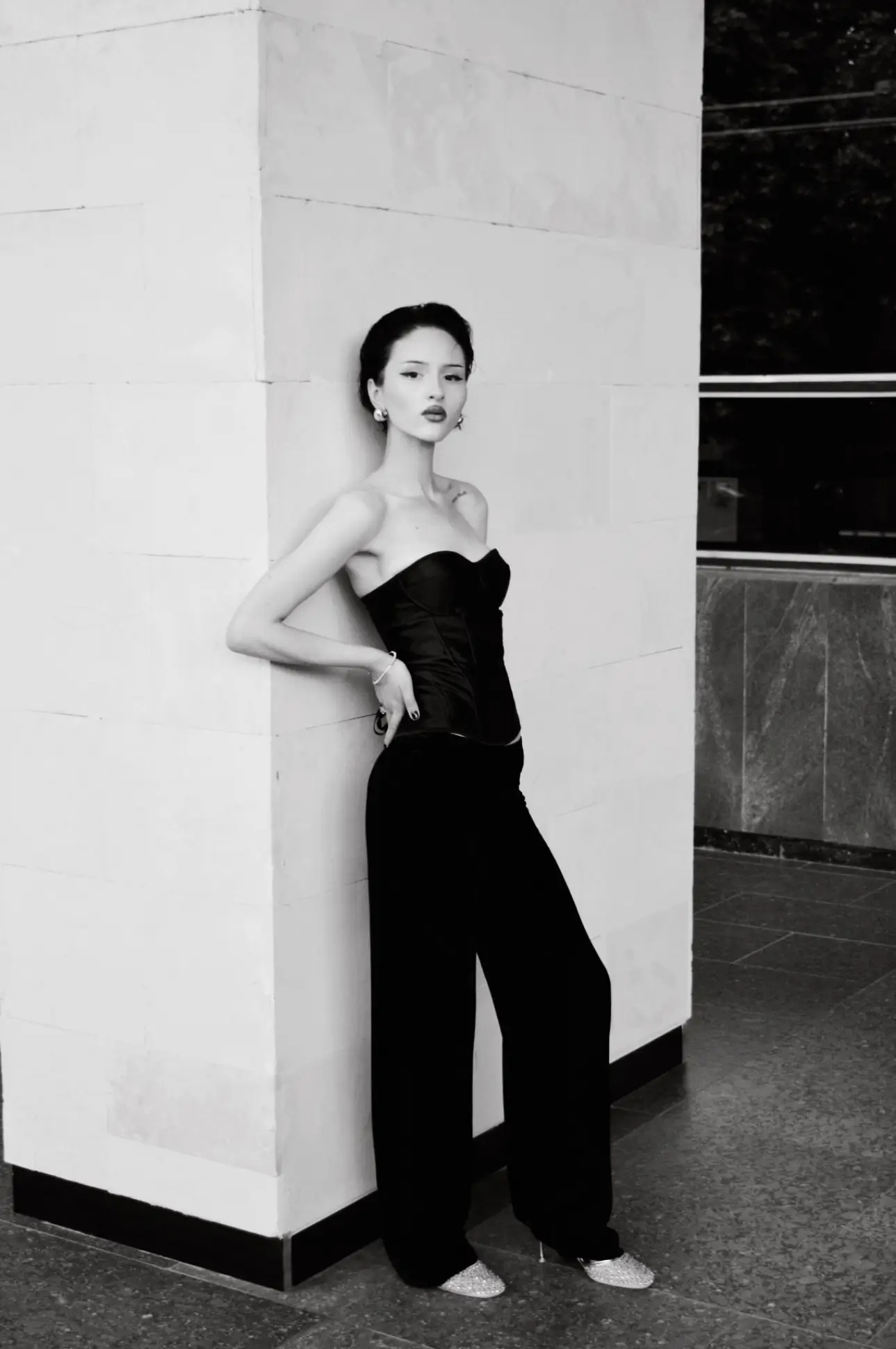
Irina-Rozalina Dvorschi
About Me
I did not choose art. I believe that, at a certain point in my life, art chose me.
From a very young age, I came to understand that there is a profound difference between living and being conscious of living. That difference, although often mistaken for a privilege, can become one of the heaviest burdens a human being will ever carry. Consciousness is more than awareness—it is the ability to perceive what others overlook. It is hearing the silence between words, sensing the invisible fractures beneath the surface of existence, and carrying questions that may never find an answer.
There were moments when my own mind became a room without windows—a place where time no longer moved and darkness was not the absence of light, but the absence of meaning. I searched for a way out in countless directions, yet every path led me back to the same silence. Eventually, I realized that I was not meant to escape that room. I was meant to transform it.
That was when I began to paint.
Not to create beautiful images, nor to imitate reality, but because painting became the only language capable of expressing what words could no longer bear. Every canvas became a conversation between consciousness and silence. Every color carried an emotion I had never managed to articulate. Every layer of paint became another attempt to understand what it truly means to exist.
For me, a painting is never merely an object. It is a trace—a testimony that a particular state of being once existed and, for a brief moment, became visible. I do not seek to provide answers, nor do I wish to tell the viewer what they should feel. My intention is to create a space where each person is confronted with their own questions.
I believe that, before anything else, we are consciousness. And consciousness is perhaps the greatest paradox of human existence: it grants us the freedom to understand the world while simultaneously asking us to carry the weight of that understanding. The deeper we look, the fewer certainties we find and the greater the mystery becomes. Perhaps suffering does not arise from life itself, but from seeing it too clearly.
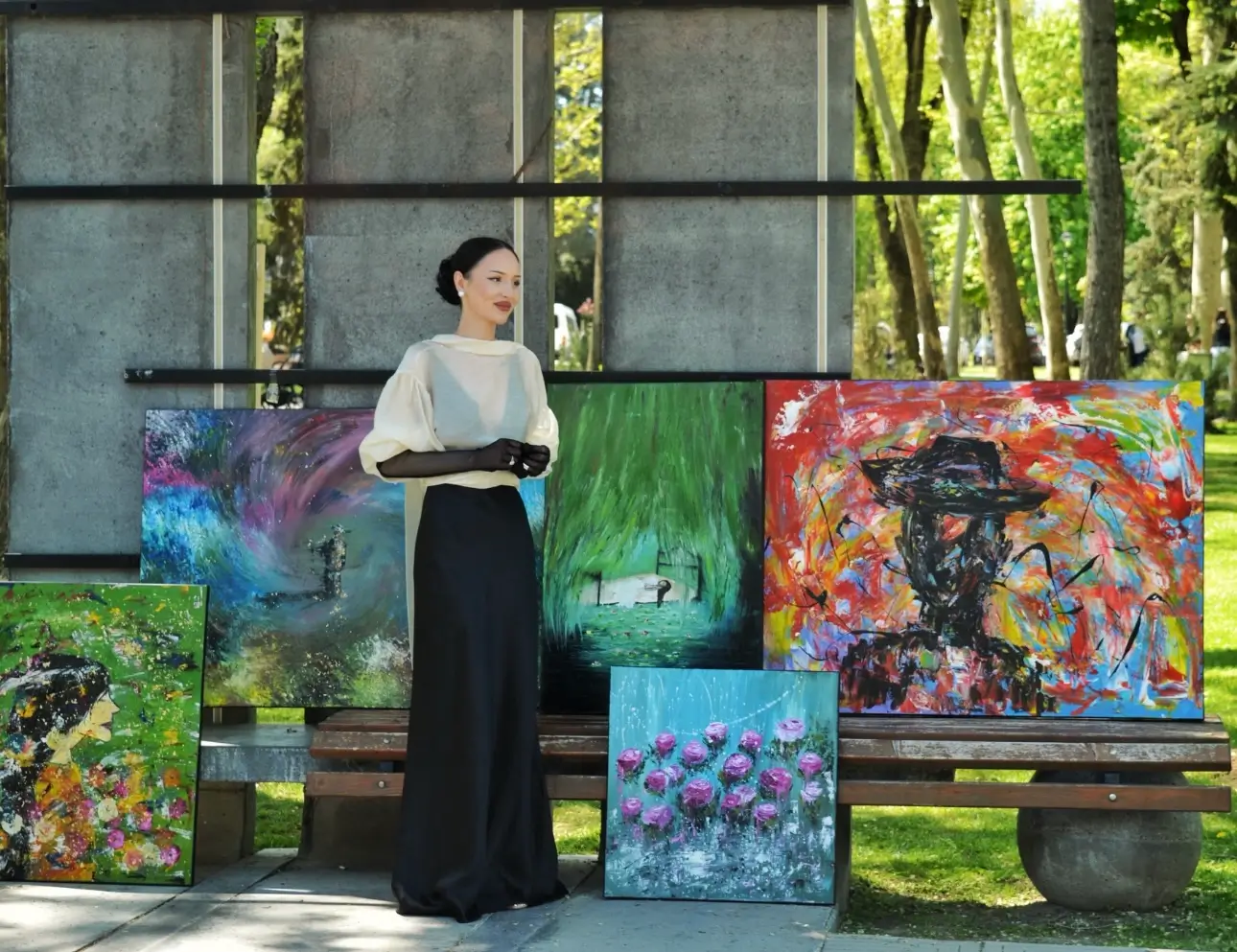
That is why the figures in my paintings rarely possess a distinct identity. They are not portraits. They are fragments of consciousness, echoes of memory, presences suspended between what once was and what can never be spoken. The flowers, the darkness, the empty spaces, the faceless figures, and the contradictions of color are not fixed symbols; they are metaphors for the inner landscapes every human being carries in silence.
Art has taught me that not every wound needs to heal in order to have meaning. Some wounds become windows through which we learn, for the first time, how to truly see. For this reason, I do not hide pain within my work, nor do I attempt to beautify it. I allow it to exist as it does in life itself—imperfect, contradictory, fragile, and profoundly human.
If my paintings can make someone pause, even for a moment—if they invite a person to look inward, or simply remind them that they are not alone in what they feel—then they have fulfilled their purpose.
Ultimately, I do not believe that art exists to decorate the world. I believe it exists to remind us that beyond everything we build in the external world, the most important journey will always be the one that leads inward, through our own consciousness. Every painting I create is, in essence, a map of that journey—an attempt to transform darkness into testimony, and pain into meaning.
Where words come to an end, painting begins. And that is where I truly began as well.